
Advancing Methods in Environmental and Ecological Statistics
Meet the dedicated experts driving our research forward.

Eduard Campillo-Funollet
Lecturer in Statistics

Emma Eastoe
Senior Lecturer in Statistics
Emma mostly carries out research into natural hazards. She has worked on projects about solar storms, air quality, glacial ice melt, river flooding and heatwaves. Her work primarily uses extreme value analysis and hierarchical modelling techniques to obtain risk estimates for these hazards. She is particularly interested in risk assessment in a changing world and exploring the intersection between environmental and ecological risk assessment.

Carolina Euan
Lecturer in Statistics
Carolina has a strong interest in the statistical modelling of environmental and ecological processes that evolve in time and space. Her expertise includes a variety of modelling techniques, such as Fourier Analysis for time-series analysis of ocean wave data and spatio-temporal modelling for regime-switching precipitation data. Additionally, Carolina is keen on integrating machine learning methods, such as clustering combined with statistical features, to manage large, complex random processes.

Israel Martinez Hernandez
Lecturer in Statistics
Israel develops new time series methodologies for large and complex datasets with temporal and spatial structure using a functional data analysis (FDA) framework, where each observation is treated as a continuous function rather than a scalar measurement. This approach is particularly suited to modern data types such as particle size distributions (concentration measured continuously across size ranges over time and space) and high-frequency sensor or acoustic signals.
His work focuses on modelling nonstationary dynamics by combining parametric structure with flexible nonparametric components. By integrating statistical theory with computational methods, his research provides principled tools for inference and prediction in high-dimensional, high-resolution settings. FDA offers a natural and scalable framework for analysing the increasingly dense and complex time series generated by modern monitoring technologies.

Rachel McCrea
Professor of Statistics
Rachel enjoys developing new statistical models to overcome issues that arise from complex ecological data. She has made considerable contribution to the state-of-the-art of capture-recapture modelling and has particular interest in translation of output from statistical models to conservation decision-making.
Rachel has worked with a number of different organisations, including the Mauritius Wildlife Foundation, TRAFFIC, Zoological Society of London, British Trust for Ornithology, Butterfly Conservation. Her statistical developments overcome the limitations of using off-the-shelf statistical models to analyse data.

Chris Sherlock
Professor of Statistics
Chris is interested in the use of Bayesian and/or computationally intensive methods in ecology. For example, utilising state space models of the time evolution of competing species and improving methods for inference and model choice.
Research Students
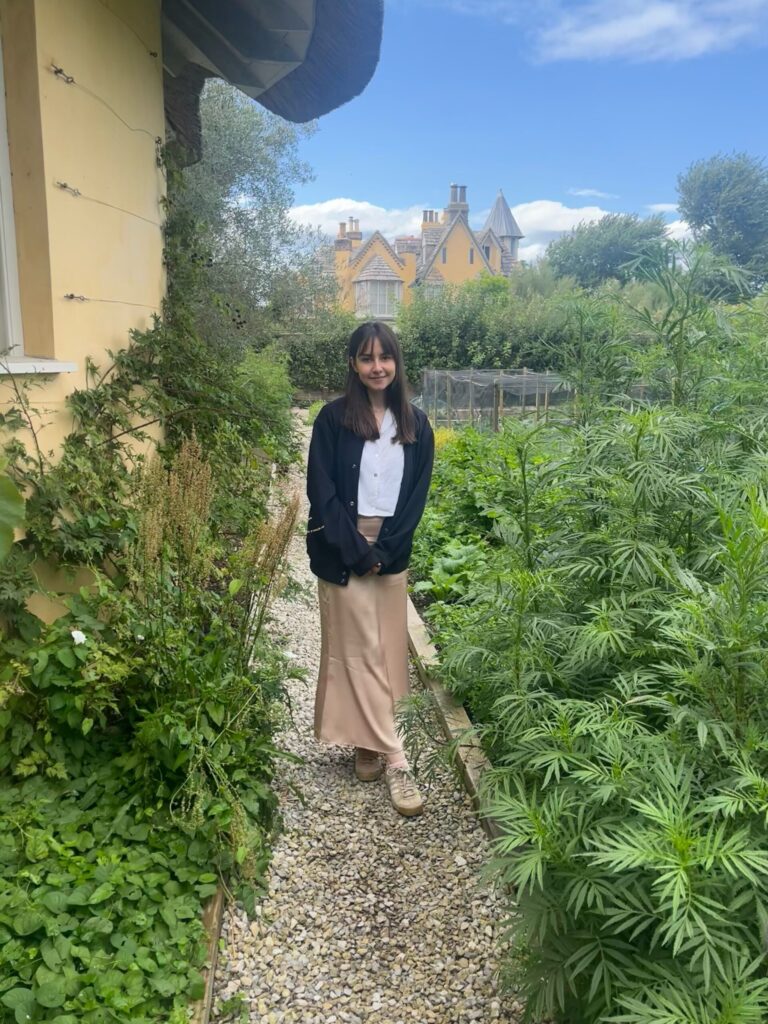
Fay Bennedik
PhD Student (ExeGeo DTP)
Fay is a PhD candidate at the University of Lancaster. Her doctoral research concerns the development of new methods for statistical abundance estimation of wildlife populations, using sensor technologies such as aerial surveys, audio recordings and camera traps. Her work combines AI and statistics to help build more effective and efficient tools for conservationists to monitor wildlife on a broader scale.
Fay is currently working on improving the accuracy of computer vision models to detect wildlife in Serengeti National Park. In particular, she is seeking to improve upon current object detection techniques that are often inadequate when many animals are in close proximity.

Malcolm Connolly
PhD Student (STOR-i CDT)
This project is in collaboration with University College Dublin, and is motivated by data provided by the British Trust for Ornithology (BTO). The project will develop new statistical models for avian population monitoring data. BTO collects capture-recapture data from volunteers who use mist nets to harmlessly capture and ring birds, as part of a long running monitoring programme of common UK resident breeding birds, called the Constant Effort Scheme (CES). Avian population monitoring provides valuable evidence of the general health of UK wildlife, and is informative to conservation efforts, as these populations are affected by the pressures of climate change, habitat loss and pesticide use. Moreover, capture-recapture data are ecologically important because they enable estimation of key demographic parameters such as abundance and survival. This project will develop models for the CES data which account for spatial correlation across the multiple CES sites which span the British Isles. Further, the capture-recapture data are currently aggregated to an annual level, and so a further aim of the project is to develop models which utilise the information from within-season recaptures to provide insight into transience and population growth.
Max Howell
PhD Student (STOR-i CDT)

Roberto Vasquez Martinez
PhD Student (STOR-i CDT)
My research focuses on developing methodologies for time-dependent count data. Examples include the number of wildfire ignitions, detections of invasive species, extreme weather events, disease cases in wildlife populations, or species abundances in synecological studies. These data are discrete, temporally dependent, and often influenced by complex environmental drivers such as climate variability and human activity.
Modern ecological and environmental monitoring systems frequently collect information on multiple variables simultaneously. Researchers may analyse counts of several species within ecological communities, track environmental events across multiple spatial locations, or study interactions between biological and climatic indicators. This leads to multivariate count time series and point process modelling, where both temporal dynamics and cross-dependence structures must be carefully characterised.
My project develops novel theoretical and computational tools for multivariate count time series and point processes, with particular emphasis on structured dependence. Some of the methodological advances are motivated by applications in environmental sciences and statistical ecology, contributing to improved modelling of ecosystem dynamics, biodiversity change, and environmental risk.
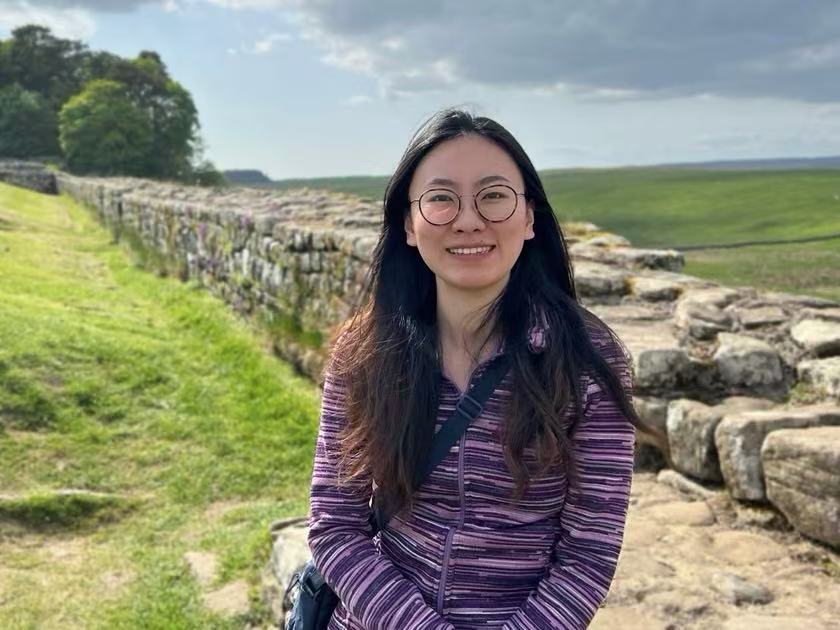
Wanchen Yue
PhD Student (STOR-i CDT)
Wanchen Yue is a PhD researcher at Lancaster University working on statistical modelling for earthquakes, with a focus on improving seismic hazard assessment under uncertainty. Her research develops statistical methods to improve inference on earthquake magnitudes by accounting for measurement uncertainty in recorded data and incorporating physical and expert knowledge. Together, these approaches reduce bias arising from changing monitoring conditions and strengthen the modelling of rare, high-impact earthquakes. She is currently developing spatio-temporal models of earthquake occurrence that capture how seismic activity evolves over time and across space, and how it relates to underlying geophysical drivers such as stress changes in the subsurface. By allowing these physical processes to inform statistical models of earthquake clustering, her work aims to provide more realistic representations of seismic behaviour.